
A year ago, when I heard about the opportunity to travel to West Africa, a combination of volunteering and traveling, I knew I had to go. This trip was my first time to Senegal and my second time to the African continent (the first time was to Morocco for pure tourism). My father and I were not sure what to expect in a country like Senegal. Senegal is a third world country, and Western media generally describe Senegal as a dilapidated and completely impoverished country. Due to the influence of mainstream media’s perception of Africa, when I actually arrived here, I actually felt that the actual situation was better than expected. Although the conditions were still far from ideal, basic living and hygiene were still guaranteed in our base.
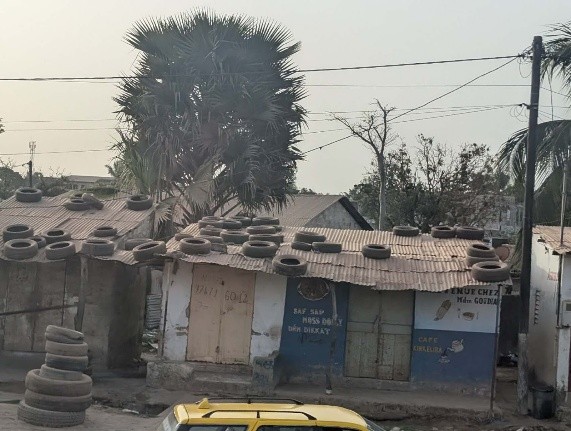
There are countless villages along the simple two-lane road, each of which bears witness to the incomprehensible level of poverty and isolation. Most people live in what are called huts, but are in fact teepees at best. For those who are a little richer and own single-room houses, a large number of tires and garbage-like debris are placed on their roofs to prevent the thin roofs from being blown away by the wind. Most people sit in the hot weather, looking at the road, letting time pass slowly.
The longest medical visit of our trip was in the Ziguinchor region, the largest city in the south. It was a village 7 hours drive from Dakar, but because we wanted to avoid rebel-infested areas, we drove a full 15 hours each way. The trip from our AMIS base near Dakar to Ziguinchor and back was from dark (early morning) to dark (late night). The whole day’s drive only showed two recurring scenes: unspoiled wilderness and completely remote, underserved communities. These villages were isolated from each other, cut off from the outside world, without medical services, and without transportation to other parts of the country.
Given the current situation in Senegal, it still needs help from people all over the world. In our group, there are people from Brazil, China, and the United States. Everyone’s language is very different, people speak Mandarin, English, Portuguese, and French. Despite the variety of languages used on the bus, we are all united in one goal, to help the truly disadvantaged people in Senegal.
During my clinical service in Ziguinchor, I was fortunate to be able to work with, and shadow, pain specialist Dr. Yu. This was also my first time to immerse myself in a purely French environment (before, I could only speak a few phrases). I started by listening to the locals speaking French to the translator, and although I could only pick up fragments of the conversation, these fragments made my experience of learning French in school suddenly valuable. For the locals in the village, this may just be their daily way of speaking and communicating, but for me, it felt like hearing the abstract words and sounds learned in the classroom come to life. Hearing words and sounds being combined to form sentences, and these sentences being combined to complete a complete communication. What are so ordinary things and everyday sentences for them are like little bells ringing in my brain, each of which may be of great significance, or at least make me feel like I have found a treasure. Every sentence, every word, every pronunciation makes me excited and inspires me to continue communicating in my French, which is not very fluent and even has a lot of accent.
Later that afternoon, I was assigned to the pre-screening patient exam table, where my interactions with patients increased significantly. Despite my limited French vocabulary and imperfect pronunciation, seeing how everyone, including the patients, responded to my attempts to communicate in French was what motivated me to keep trying. When I tell them “Je vais mesurer ton poids” (I will measure your weight), they would step up to the scale.
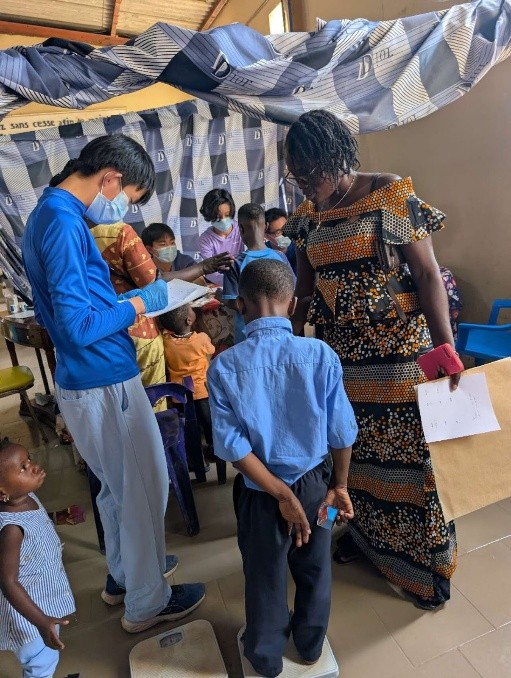
It helped me connect with those people, and the short time I had with each patient really helped smooth the communication process for them and us. It reminded me of the concept of breaking the fourth wall in theater, where instead of having to communicate with crazy hand gestures, language could convey the message directly. When signing up for this medical trip, I never expected that my high school language classes would be so useful. However, I was proven wrong. This experience not only highlighted the practical importance of learning another language. It showed me how language can foster new connections and trust between people and make interactions more meaningful.
Witnessing the poverty in Senegal and realizing how we ignore it has highlighted the importance of this cause. Working with the Africa Cries Out has inspired me to appreciate my life and opportunities more than ever before. I am truly grateful for the opportunity to help the people of Senegal. Since returning home, I have also been more reflective and appreciate every part of my life, including my education. My education has allowed me to learn French, which I have used during my travels. I went from being unable to speak French at the beginning of my trip to now being able to communicate and express some of my ideas with French speakers. Having the opportunity to participate in trips like this has also given me a new perspective on poverty, and I hope to continue to help the people of Africa in the years to come.
*************************************
If you are moved and willing to support our African ministry, please write a check to Africa Cries Out and send it to Jun Xu, MD, 1171 E Putnam Avenue, Riverside, CT06878, USA. You will receive a tax-free receipt recognized by the IRS.
Online Credit Card Donation: https://africacriesout.net/ (credit card company will charge a handling fee)
Zelle: Africacriesout@gmail.com
Our team solemnly declares that 100% of your donation will be used for the people of Africa, and we do not get even a penny of administrative fees.
Jun Xu WeChat: jun9174343767
Email: Africacriesout@gmail.com
Public WeChat account: LifeExploring (人生天路)
Web page: https://africacriesout.net
Editor: Doris Cruz