
Reflections Before the Surgical Mission — In Memory of My Father
Africa Cries Out Report — Issue 10, 2026
Zhao Rong
March 2026
The annual Africa Cries Out medical mission in Senegal is about to begin, and the surgical team will depart this week. Last Saturday morning, we had just finished our pre‑departure online meeting, and then immediately began sorting supplies and packing luggage. In the midst of this busyness, my father—who had passed away not long ago—kept coming to mind. Many things may appear accidental, yet perhaps each has its own rhythm and arrangement.
I have been a believer for more than ten years, but I rarely talked about faith directly with my parents. I always felt there would be plenty of time in the future; they were still in relatively good health, and I assumed there would be opportunities to communicate slowly. My parents’ generation grew up in an environment that emphasized rationality and science. They were well‑educated and had a clear, stable worldview. They never opposed my faith; in fact, they somewhat understood it—thinking that living overseas, it was good for a person to have some spiritual support. They appreciated people who worked diligently and helped others, which gave them peace of mind.
Everything began to change only after my father became ill.
At age seventy‑two, he suffered a sudden cerebrovascular accident. He spent months in the ICU, followed by a long period of rehabilitation. Although he eventually regained the ability to walk, the right side of his body remained weak, and he essentially lost the ability to read and write. His speech also became difficult. From then on, his condition was never truly stable. I tried to talk with him about deeper matters, but his comprehension had declined significantly. I don’t know how much he understood—only that he would quietly nod.
At the end of last year, my father had another stroke, and his condition worsened significantly. He lost the ability to swallow and could no longer clear his airway on his own, relying entirely on nursing care to survive. Long‑term bed rest and advanced age left him extremely frail. When I visited, he slept most of the time. Even when my mother—who had been caring for him constantly—called his name, he would only occasionally open his eyes for a brief moment.
In that moment, I knew clearly: our time together was running out.
At his bedside, I led him in the simplest prayer to accept the Lord. When we finished, I whispered, “Dad, if you are willing, open your eyes and blink a few times.” As soon as I said it, he suddenly opened his eyes and blinked forcefully several times. In that moment, I deeply felt the gracious hand of the Lord at work.
After that, my father mostly remained asleep, though his condition stabilized temporarily. I returned to work, praying for him quietly each night—hoping he would suffer less and experience more peace.
One early morning in March, I received a call from my sister. She said Father’s blood pressure had dropped sharply, treatment was ineffective, and his condition was extremely critical. She asked if I had any final words for him, because he might not hold on until I returned. I asked her to tell him:
“Don’t worry. We will all live well. You can go in peace, without concern. One day we will meet again in our heavenly home.”
Not long after, my father passed away quietly. My sister later told me he left peacefully.
What felt particularly meaningful to me was this: my father passed away in early March, while I had already planned to join the Africa Cries Out medical mission at the end of the month. At first, I thought it was just a coincidence—as if, in some way, he was still supporting my participation in this ministry. But during a Sunday message, I heard these words:
“Nothing happens by accident; everything is arranged by the Lord.”
In that moment, I suddenly understood—this was not coincidence. This was His arrangement.
My father’s condition had been extremely critical since late last year. According to the doctors, he did not have much time left. Yet he held on until early March. For my mother, this period allowed her to gradually accept and adjust. For me, it gave the opportunity to accompany him, to say goodbye, and to speak the words I had not yet said. Looking back, I am more inclined to believe that many turning points in life may carry arrangements we cannot fully understand at the time.
Thinking about my father’s life—he was handsome, disciplined, hardworking, and lived simply and with restraint. He was not a man of many words, but he taught us how to live through his actions: exercise regularly, study well, work diligently. I remember as a child watching him write at his desk. He once asked me to help copy his manuscripts, offering one yuan per page. At that time, one yuan was a lot, but I still chose to go out and play. He never forced me—just smiled and let me go.
Years later, when I chose to study medicine and faced the long, grueling years of training, I somehow persevered. Only then did I realize that the perseverance and discipline he embodied had already been passed on to me, quietly and unconsciously.
Though my father is gone, what he left me is not only memory, but also the strength to keep moving forward.
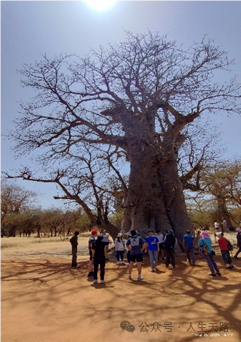
As my thoughts wandered, I looked through photos from past years of the Africa Cries Out medical mission. That “Tree of Life”—the locals told us that early missionaries to Senegal were buried beneath this baobab tree. It symbolizes a kind of legacy.
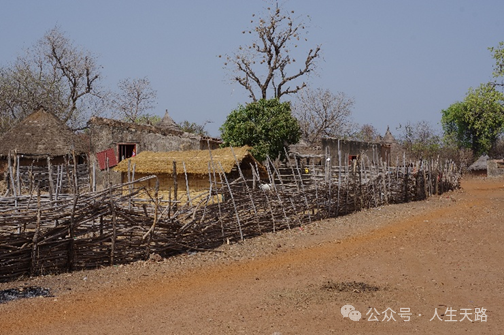
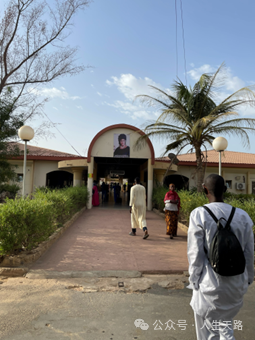
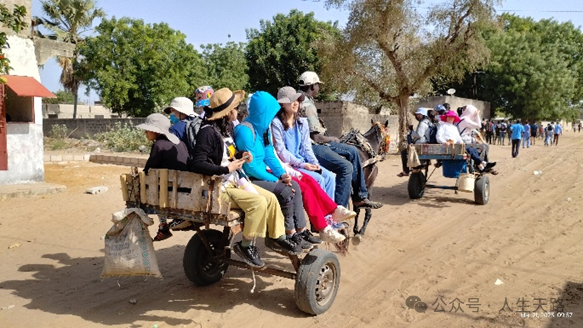
Looking at the dusty village roads, the convoy of ACO medical volunteers entering the villages, and our surgical team beginning a full day of intense operations at the local hospital—which, by local standards, has relatively better medical conditions—I felt again the weight and meaning of this work.
About the Author
Zhao Rong
Anesthesiologist
Multiple‑time volunteer with the Africa Cries Out medical team